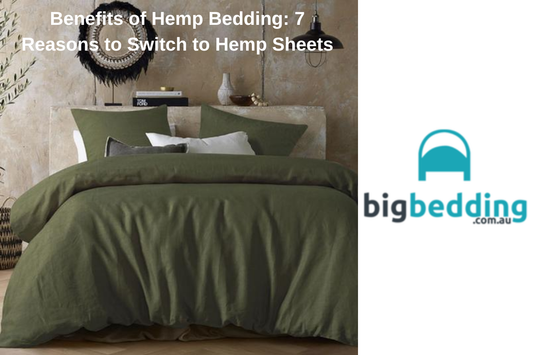
Benefits of Hemp Bedding: 7 Reasons to Switch to Hemp Sheets
If you've spent any time researching natural bedding lately, you've noticed hemp popping up everywhere. Once a niche choice tucked away in eco-stores, hemp bedding has become the most talked-about material in Australian bedrooms. It's breathable, hard-wearing, kind to sensitive skin, and about as sustainable as a natural fibre gets.
The benefits of hemp bedding go well beyond the green label, though. Hot sleepers love it for keeping cool through a Sydney summer. Allergy sufferers appreciate that it's naturally hypoallergenic. And anyone who's tired of replacing, pilling sheets every couple of years tends to fall for the fact that hemp gets better the more you wash it.
In this guide, you will learn what hemp bedding actually is, why more Australians are switching to it, and the seven biggest benefits of hemp sheets. It also outlines the hemp vs cotton comparison, care tips, and answers to the questions we get asked most. By the end, you'll know whether hemp linen sheets are the right fit for your bed.
What Is Hemp Bedding?
Hemp bedding is bed linen sheets, pillowcases, quilt covers, and sometimes blankets woven from fibres of the industrial hemp plant (Cannabis sativa). Industrial hemp contains only trace amounts of THC, so there's nothing psychoactive about your sheets. It's a fibre crop, grown the way flax or cotton is.
What hemp fabric is
Hemp fabric comes from the long, strong bast fibres found in the stalk of the plant. These fibres are among the sturdiest in the natural world, which is why hemp has been used for rope, sails and canvas for thousands of years. When those same fibres are refined and spun finely, you get a soft, breathable textile that's perfect for bedding rather than boat rigging.
How hemp sheets are made
Turning a woody stalk into soft hemp bed linen takes a few steps. After harvest, the stalks are retted (a natural process that loosens the fibres from the woody core), then broken down, combed and spun into yarn. That yarn is woven, in a plain or percale style weave into fabric, which is then cut and sewn into sheet sets. Some manufacturers blend hemp with natural fibres such as organic cotton or eucalyptus-derived lyocell to balance softness and strength, which is why you'll see options like a eucalyptus-hemp blend alongside pure hemp.
Why hemp is becoming popular
A few trends have collided at once. Australians are more climate aware than ever and want home products that reflect their values. Hot, humid summers have people hunting for breathable, cooling bed sheets. And after a decade of fast homewares, there's a real appetite for buy-it-once bedding that lasts. Hemp ticks all three boxes, which is why it's moved from the fringe to the mainstream.
Is hemp the same as linen?
Traditional linen is made from the flax plant, while hemp comes from the hemp plant. Both are bast fibres, breathable, and develop that lived-in, relaxed drape people love. Hemp is more durable than flax linen and tends to soften faster.
Why More Australians Are Choosing Hemp Bedding
Sustainable bedding in Australia has gone from a nice to have to a genuine buying priority, and hemp sits right at the centre of that shift.
On sustainability, hemp is hard to beat. It's the most water-efficient natural fibre available, needing far less irrigation than conventional cotton to produce the same amount of fabric. It grows quickly and densely, which crowds out weeds, so it needs little to no pesticide or herbicide. It even returns nutrients to the soil and is a strong absorber of carbon dioxide as it grows. For eco-conscious households, that's a compelling story before you've even felt the fabric.
Then there's the eco-conscious living angle. Choosing organic hemp bedding is one of those low-effort, high-impact swaps — you're going to buy sheets anyway, so choosing a natural, biodegradable, long-lasting option means fewer worn-out synthetics heading to landfill. Hemp bed linen is compostable at the end of its (very long) life, unlike polyester blends that shed microplastics with every wash.
Hemp suits the Australian climate beautifully. The summers here are hot and humid, and winters depending on where you are, can swing from mild to genuinely cold. A fibre that keeps you cool when it's sweltering yet insulates when it's chilly is what a country of varied climates needs. That year-round versatility is a big part of why hemp bedding in Australia searches keep climbing.
7 Benefits of Hemp Bedding
Here are the seven benefits of hemp bedding that matter most in real bedrooms, not marketing fluff, but the things you'll notice.
1. Naturally Breathable for Better Sleep
Hemp fibres are porous and the fabric has a slightly open, textured weave, so air moves through it freely rather than trapping heat against your body. That breathability is the biggest reason people rave about breathable hemp sheets.
Why it matters: your body temperature drops as you fall asleep, and bedding that traps heat interrupts that process, leaving you tossing and kicking off the covers at 3 am. Breathable bedding helps your body settle into deeper, less interrupted sleep.
Who benefits most: hot sleepers, menopausal women managing night sweats, and anyone in a warmer climate. If you've ever woken up clammy under synthetic or heavy cotton sheets, the difference on your first night under hemp is noticeable.
2. Excellent Temperature Regulation All Year Round
Breathability is only half the story, hemp is also thermoregulating, meaning it helps keep you cool in summer and warm in winter. The same porous structure that releases heat on hot nights also traps a layer of insulating air when it's cold, so your bed feels balanced rather than swinging between sweaty and freezing.
The practical benefit is that you can genuinely use one set of hemp linen sheets across all four seasons instead of buying separate summer and winter bedding. Pair them with the right quilt for the season and you're sorted year-round.
Who benefits most: anyone who doesn't want a wardrobe full of seasonal bedding, and households in parts of Australia where a single week can serve up a 35°C day and a 10°C night. For the colder months, layering hemp sheets under a good warm winter quilt gives you cosy insulation without overheating.
3. Highly Durable and Long-Lasting
These are the fibres people once made ship sails and rope from. Hemp is the strongest natural fibres on the planet, and hemp fabric can be several times more durable than cotton. Where cheaper cotton sheets start to thin, pill and tear after a year or two of regular washing, quality hemp bedding is going strong after a decade.
Why it matters: Durability is where hemp saves you money. Fewer replacements means lower cost per year of use, and far less waste. It's the definition of buy-well, buy-once.
Who benefits most: Busy households, families with kids, anyone tired of the two-year sheet replacement cycle, and value-driven shoppers who care about cost over the long run rather than the price on the tag.
4. Softens with Every Wash
Here's the characteristic that surprises new hemp converts. Hemp sheets can feel a touch crisp or rustic straight out of the packet, that's completely normal for a natural bast fibre, but they soften noticeably with every single wash. Within a few laundry cycles you're left with a beautifully relaxed, lived-in feel that many people prefer to the artificial slipperiness of treated cotton.
Why it matters: Unlike synthetic sheets that degrade with washing, hemp improves. The fabric breaks in like a favourite pair of denim jeans or a well-loved leather bag, getting more comfortable the longer you own it.
Who benefits most: Anyone who loves that soft, casual, slept-in luxury feel, and shoppers willing to look past a slightly firmer first night in exchange for years of increasing softness. A little patience is rewarded here.
5. Hypoallergenic and Gentle on Sensitive Skin
Hemp is naturally hypoallergenic and resistant to mould, mildew and dust mites, three of the most common triggers for allergy and asthma sufferers. Because quality hemp bedding needs so few chemicals to grow and process, there are also fewer residues and harsh finishes sitting against your skin each night.
Why it matters: Your skin is in contact with your sheets for roughly a third of your life. For people with eczema, sensitive skin, allergies or respiratory conditions, a naturally clean, breathable, mite-resistant fibre can make a real difference to comfort and sleep quality.
Who benefits most: Allergy sufferers, asthmatics, parents choosing bedding for children with sensitive skin, and anyone who reacts to the chemical finishes found on some conventional and easy-care sheets.
6. Eco-Friendly and Sustainable
Hemp is the most eco-friendly bedding fibres you can buy. It uses dramatically less water than cotton, grows without needing pesticides or herbicides in most cases, produces a high fibre yield from a small footprint of land, and is fully biodegradable at the end of its life.
Why it matters: Textiles are a major contributor to global waste and emissions. Choosing sustainable bedding is meaningful, everyday way to lower your household's footprint, no lifestyle overhaul required.
Who benefits most: Eco-conscious consumers, anyone building a more sustainable home, and shoppers who want their purchases to line up with their values without sacrificing comfort or quality.
7. Moisture-Wicking and Odour-Resistant
Hemp is highly absorbent and moisture-wicking, drawing perspiration away from your skin and releasing it into the air so you stay dry and comfortable. On top of that, hemp has natural antimicrobial and antibacterial properties, which means it resists the bacteria that cause bedding to smell stale between washes.
Why it matters: Fresher sheets for longer, fewer washes needed, and no more waking up in a damp patch after a warm night. The moisture-wicking action works hand in hand with the breathability to keep your sleep environment dry and pleasant.
Who benefits most: Night-sweaters, hot sleepers, athletes, and anyone who wants their bed to feel and smell fresh for longer between laundry days. It's a quiet luxury you notice most on the nights you'd otherwise be uncomfortable.
Hemp Sheets vs Cotton Sheets
Cotton is the default most of us grew up with, so how does hemp compare? Here's an honest, side-by-side look at hemp vs cotton sheets across the factors that matter.
|
Factor |
Hemp Sheets |
Cotton Sheets |
|
Breathability |
Excellent, porous, open weave, highly airflow-friendly |
Good, though tighter high-thread-count weaves can trap heat |
|
Durability |
Exceptional, among the strongest natural fibres; lasts 10+ years |
Moderate, tends to thin and pill after 1–3 years |
|
Sustainability |
Very high, low water use, minimal pesticides, high yield, biodegradable |
Lower, water- and pesticide-intensive (conventional cotton) |
|
Softness |
Firmer at first, softens beautifully with every wash |
Soft from day one, but can degrade over time |
|
Water usage |
Significantly lower to grow and process |
High, cotton is the thirstiest fibre crops |
|
Maintenance |
Easy, machine washable, resists odour, needs fewer washes |
Easy, but may need more frequent washing and can shrink |
|
Cost |
Higher upfront, lower cost per year over its lifespan |
Lower upfront, higher long-run cost due to replacement |
|
Longevity |
10+ years with proper care |
2–3 years for everyday cotton |
Cotton wins on immediate softness and upfront price, but hemp wins decisively on durability, sustainability, breathability and long-term value. If you're choosing bedding you'll still love a decade from now, hemp is the smarter buy.
Are Hemp Sheets Worth the Investment?
There's no getting around it: Quality hemp bedding costs more upfront than a budget cotton or microfibre set. But upfront cost and actual cost are two different things. A $60 sheet set you replace every two years costs more over ten years than a premium hemp set you buy once. When you divide the price by the years of use, hemp is the cheaper option.
Then there's the value that doesn't show up on a receipt. There's the environmental impact of choosing a low-water, low-chemical, biodegradable fibre over a resource-hungry or plastic-shedding alternative. There's the sleep comfort of breathable, temperature-regulating, moisture-wicking sheets that keep you comfortable all night, all year. And there's the durability that means you're not thinking about bedding again for a very long time.
For most people, hemp sheets pay for themselves in longevity, and the improved sleep and lighter footprint are the bonus. When you weigh up the full benefits of hemp bedding against the modest premium, they're comfortably worth the investment for anyone who values quality, comfort and sustainability.
How to Care for Hemp Bedding
The good news: hemp is refreshingly low-maintenance. Look after it well and it'll reward you with years of softening comfort.
Washing:
Machine wash in cold to warm water (up to about 40°C) on a gentle or normal cycle. Use a mild, eco-friendly detergent and skip the fabric softener; hemp softens naturally, and softeners coat the fibres and reduce breathability. Wash with similar colours.
Drying:
Line drying is ideal and gentlest on the fibres (avoid harsh direct sun for long periods on darker colours to protect the colour). If you prefer the dryer, use a low-heat setting and remove the sheets while slightly damp to minimise wrinkles and wear.
Ironing:
Hemp has a relaxed, natural texture, so most people happily skip ironing altogether, the lived-in look is part of the charm. If you want a crisper finish, iron on a medium setting while the fabric is slightly damp.
Storage:
Store your hemp bed linen in a cool, dry spot with good airflow. A breathable cotton or linen storage bag is better than airtight plastic, which can trap moisture. Ensure sheets are completely dry before storing to prevent any mildew.
Tips to extend lifespan:
Rotate between two sheet sets so no single set takes all the wear, wash a little less (hemp's odour resistance makes this easy), avoid overloading the machine so the fabric can move freely, and steer clear of bleach and harsh stain removers. Small habits, many extra years.
How to Choose Quality Hemp Bedding
Not all hemp bedding is created equal. Here's what to weigh up so you buy once and buy well.
GSM (grams per square metre):
GSM tells you the weight and density of the fabric. A mid-weight hemp sheet strikes the best balance, substantial and durable, but breathable and soft. Very light fabrics may feel thin; very heavy ones can feel stiff. For sheets, aim for a comfortable mid-range weight.
Fabric blends:
Decide between 100% hemp and a blend. Pure hemp gives you maximum durability and sustainability. Blends, such as hemp with organic cotton, or a eucalyptus-hemp mix can offer extra initial softness and drape while keeping most of hemp's benefits..
Weave:
A plain or percale-style weave is the most common for hemp and delivers that breathable, crisp-then-soft feel. Check that the weave is even and tight enough to be hard-wearing without sacrificing airflow.
Certifications:
This is your quality and trust signal. Look for recognised certifications such as OEKO-TEX Standard 100 (tested for harmful substances) or GOTS (Global Organic Textile Standard) for organic hemp bedding. Certifications confirm the fabric is free from nasty chemical residues, important for sensitive skin.
Size:
Check the exact dimensions for your mattress, including depth, so fitted sheets fit snugly over pillow-top or deeper mattresses. Australian bed sizes are standardised, but mattress depths vary, so match the fitted-sheet wall depth to your mattress.
Colour options:
Hemp takes natural, earthy dyes beautifully, think oatmeal, sage, terracotta, charcoal and classic white. Choose a colour you'll love for years, since a quality set will be with you for the long haul. Neutral tones also hide everyday wear gracefully.
If you'd like a hand narrowing it down, our team is always happy to talk you through the options in our Australian hemp bedding range and help you match sheets to your mattress and climate.
Conclusion
Hemp bedding has earned its moment. It's breathable and cooling for warm climate, thermoregulating enough to work all year, remarkably durable, naturally hypoallergenic, moisture-wicking and odour-resistant, and it's about the most sustainable natural fibre you can put on a bed. Add the fact that it softens with every wash rather than wearing out, and it's easy to see why so many Australians are making the switch.
If those seven benefits of hemp bedding sound like what your bedroom has been missing, there's never been a better time to try it. Explore Big Bedding Australia's hemp bedding range, including our popular Eucalyptus Hemp Sheet Set, for breathable, sustainable comfort that only gets better with time. Your best sleep, and a lighter footprint, could be one sheet set away.
Frequently Asked Questions
Are hemp sheets soft?
Yes, though they get softer over time. Hemp can feel slightly crisp or textured straight out of the packet, which is normal for a natural bast fibre. With each wash the fibres relax, and within a few cycles you're left with a soft, lived-in feel that many people prefer to standard cotton. Blends with cotton or eucalyptus feel softer from the very first night.
Do hemp sheets shrink?
Hemp can shrink slightly on the first wash, like most natural fibres, but reputable brands pre-shrink their fabric to minimise this. Washing in cold to warm water and avoiding high dryer heat keeps shrinkage to a negligible level.
Is hemp bedding better than cotton?
It depends on what you value. Hemp is more durable, more sustainable, more breathable and better at temperature regulation, while cotton is softer on day one and cheaper upfront. For longevity, sustainability and hot sleepers, hemp comes out ahead, and it costs less per year over its lifespan.
Is hemp bedding suitable for summer?
It's the best choice for summer. Hemp is highly breathable, moisture-wicking and cooling, drawing heat and perspiration away from your body so you stay dry and comfortable through hot, humid Australian nights.
How long do hemp sheets last?
With proper care, quality hemp sheets commonly last 10 years or more, several times longer than everyday cotton sheets. Their exceptional fibre strength is exactly why hemp is such good long-term value.
Is hemp bedding good for allergies?
Yes. Hemp is naturally hypoallergenic and resistant to dust mites, mould and mildew, and quality hemp needs very few chemicals to produce. That makes it a great option for allergy sufferers, asthmatics and anyone with sensitive skin, look for a certified, low-chemical option for maximum peace of mind.
Does hemp bedding wrinkle?
Hemp has a relaxed, natural texture and will show some soft creasing, which most owners embrace as part of its casual charm. If you prefer a crisper look, remove sheets from the dryer while slightly damp, or give them a light iron. Blends tend to wrinkle a little less than pure hemp.
Can hemp sheets be tumble dried?
Yes, on a low-heat setting. To protect the fibres and reduce wrinkling, tumble on low and remove the sheets while they're slightly damp, then finish on the line or bed. Line drying is gentlest of all and helps your sheets last even longer.